Pomato: Two Crops on One Plant
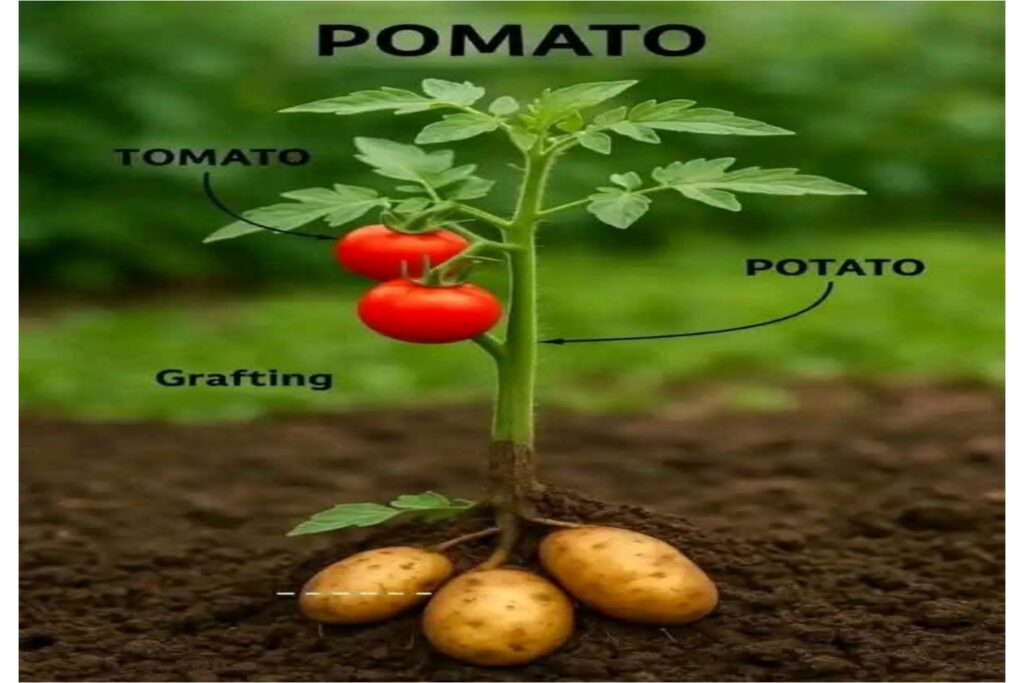
● Pomato is a hybrid plant where tomatoes and potatoes are grown on the same plant. It’s not a genetically modified organism (GMO) but rather the result of plant grafting, where the tomato plant (above ground) is grafted onto a potato plant (below ground). Both belong to the Solanaceae (nightshade) family, making them compatible for such a technique.
How Pomato is Made
1. Selection of Plants:
A healthy tomato plant and a healthy potato plant are chosen.
2. Grafting Technique:
● The tomato stem is cut just above the root zone. ● The potato plant is cut just above the soil level.
● The tomato shoot is grafted onto the potato rootstock using the cleft grafting or splice grafting method.
3. Healing Phase: The grafted plant is placed in a humid, warm environment to allow the tissues to fuse. 4. Growth: Once healed, the plant is allowed to grow normally, producing tomatoes above ground and potatoes underground.
■ Advantages of Pomato
● Dual Harvest: Produces two vegetables from a single plant – tomatoes and potatoes.
● Space-Saving: Ideal for urban gardening, balconies, and small farms.
●Efficient Resource Use: One plant system uses sunlight, water, and nutrients to grow two crops. • Educational Tool: Great for teaching plant biology, grafting, and crop innovation.
■ Limitations
• Not a natural hybrid: No seeds are produced that can regrow pomato; grafting must be done each time. • Requires Skill: Grafting must be precise; failure can result in poor union or plant death.
• Limited Commercial Use: Mostly used for demonstration, research, or home gardening rather than large-scale farming.
■ Real-World Use and Research
• First developed successfully by horticulturists and researchers in countries like Germany, India, and the UK.
• Institutes like IARI (Indian Agricultural Research Institute) and Thompson & Morgan (UK) have developed versions of the pomato.
• In India, it’s used as a concept crop in agricultural education and demonstration plots.
■ Conclusion The Pomato is a fascinating example of how grafting techniques can be used creatively to grow two crops from one plant. While it’s more of a biotechnological curiosity or educational tool than a commercial farming method, it shows the power of plant compatibility and innovation in agriculture.