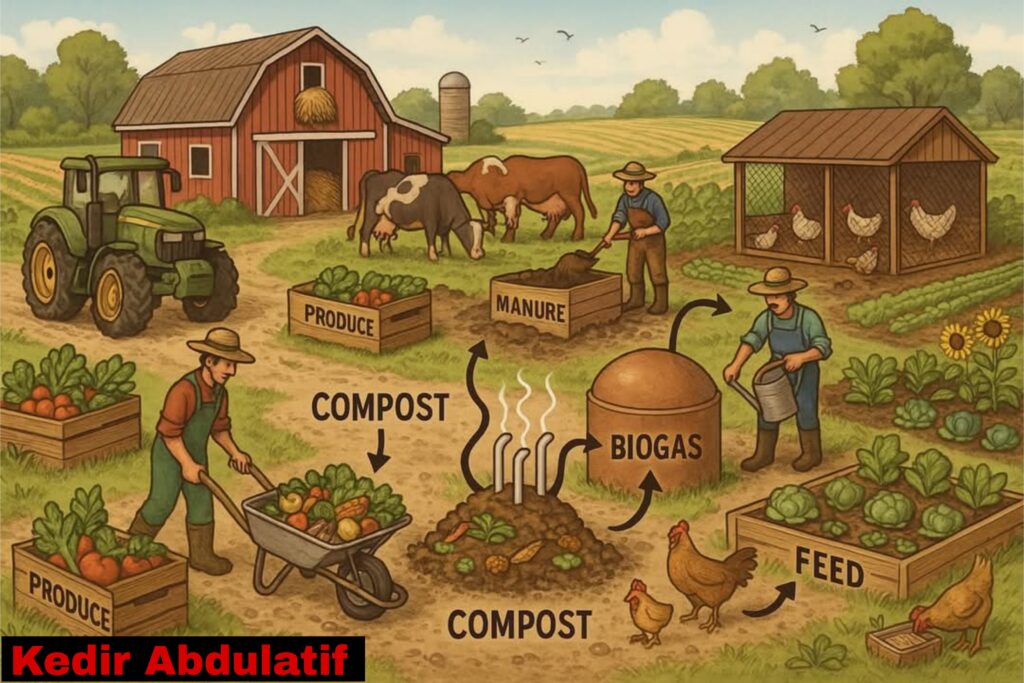
A farm where nothing goes to waste is a model of sustainability, efficiency, and harmony with nature. Here’s a detailed description:
- Organic Crop Fields:
The farm grows a variety of crops—vegetables, grains, and fruits—without synthetic fertilizers or pesticides. Natural compost and manure are used to nourish the soil. - Livestock Integration:
Cows, chickens, goats, and pigs are raised ethically. Their manure is collected and used to fertilize the fields or processed in biogas digesters to produce renewable energy for cooking and heating. - Composting System:
All organic waste—crop residues, kitchen scraps, and animal bedding—is composted. This rich compost is returned to the fields, closing the nutrient loop. - Biogas Plant:
Animal and food waste is fed into a sealed biodigester. Methane produced fuels farm operations, while the byproduct (slurry) becomes high-quality fertilizer. - Chicken Coop and Feed Recycling:
Chickens are fed on kitchen scraps and damaged produce, converting waste into eggs and manure. Their bedding and droppings are added to the compost pile. - Rainwater Harvesting:
Rainwater is collected from roofs and stored in tanks for irrigation, reducing dependence on groundwater. - Crop Rotation & Polyculture:
To maintain soil fertility, different crops are rotated and interplanted. This prevents pests and reduces the need for external inputs. - Zero-Waste Market:
Produce is sorted—premium items go to market, while misshapen or surplus items are processed into jams, sauces, or animal feed. - Renewable Energy Sources:
Solar panels and wind turbines provide clean energy for electrical needs like irrigation pumps, lighting, and refrigeration. - Education & Community:
The farm often hosts workshops, showing others how to mimic these systems, creating a ripple effect of sustainable agriculture.
This farm operates like a living organism—everything has a purpose, and every output is an input for something else. Nothing is discarded, and the result is a healthy, self-sustaining ecosystem.
Crop Rotation

Crop rotation is a sustainable agricultural practice in which different crops are grown in a specific sequence on the same piece of land across several seasons or years. This method helps maintain soil health, improve crop yields, and reduce reliance on chemical inputs. Here’s how it contributes to sustainability:
🌱 Key Benefits of Crop Rotation:
- Soil Fertility Maintenance:
Different crops take up and return different nutrients. For example, legumes like beans fix nitrogen in the soil, enriching it for future crops like corn or wheat. - Pest and Disease Control:
Rotating crops breaks pest and disease cycles by removing their preferred host crops, reducing the need for pesticides. - Weed Suppression:
Varying plant types and root structures can naturally suppress weeds, reducing herbicide usage. - Improved Soil Structure and Health:
Crops like deep-rooted carrots or alfalfa enhance soil aeration and structure, while fallow periods or cover crops allow soil to rest and regenerate. - Reduced Erosion and Runoff:
Alternating crops and including ground-cover plants protect the soil surface and reduce water erosion.
🔁 Typical Crop Rotation Example:
Year 1: Corn (heavy nitrogen consumer)
Year 2: Beans (nitrogen fixer)
Year 3: Fallow or cover crop (rest and soil improvement)
Year 4: Root crop like carrots (different root depth and nutrient use)
🌍 Why It’s Sustainable:
Crop rotation mimics natural ecosystems, increases biodiversity, and minimizes environmental harm. It’s a cornerstone of regenerative and organic farming systems, leading to long-term agricultural productivity and environmental resilience.
Organic Farming as a Sustainable Practice
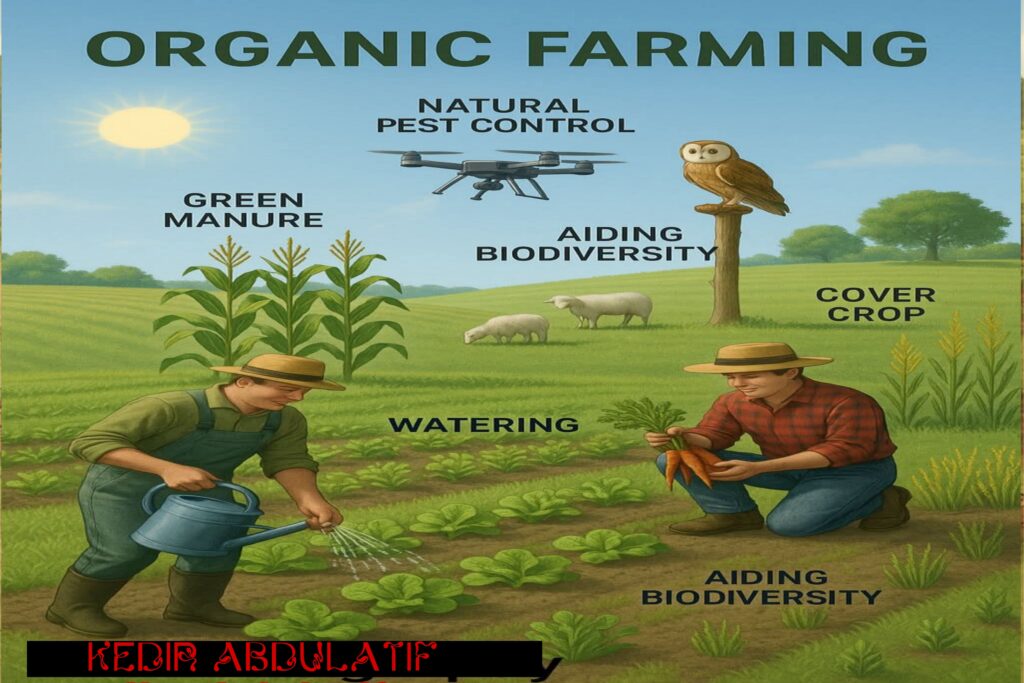
Organic farming is a sustainable agricultural practice that relies on natural processes, biodiversity, and cycles adapted to local conditions, rather than synthetic inputs such as chemical fertilizers, pesticides, or genetically modified organisms (GMOs). It aims to produce food in ways that preserve the environment, support ecosystem health, and maintain long-term agricultural productivity.
🌿 Key Principles of Organic Farming as a Sustainable Practice:
- Soil Health & Fertility
Organic farming uses compost, green manure, and crop rotation to enhance soil fertility and structure.
Healthy soils increase water retention, reduce erosion, and support nutrient-rich plant growth. - Natural Pest & Disease Control
Instead of synthetic pesticides, organic systems use natural predators, crop diversity, and physical barriers to manage pests.
This helps avoid chemical residues in food and protects beneficial organisms like pollinators. - Biodiversity Preservation
By growing diverse crops, maintaining hedgerows, and supporting wildlife habitats, organic farms enhance biodiversity.
Greater biodiversity increases resilience against climate shocks and pest outbreaks. - No GMOs or Synthetic Additives
Organic standards prohibit genetically modified organisms and artificial enhancers, ensuring natural crop development and healthier food systems. - Animal Welfare
Livestock are raised in humane conditions with access to outdoor areas, organic feed, and without antibiotics or growth hormones. - Climate and Environmental Benefits
Organic farming reduces greenhouse gas emissions, increases carbon sequestration in soils, and avoids pollution from chemical runoff.
🌍 Why Organic Farming is Sustainable:
Organic farming works in harmony with nature. It prioritizes long-term environmental health, food security, and human well-being. By avoiding harmful chemicals and supporting regenerative practices, organic farming builds a foundation for future generations to thrive.
Regenerative Agriculture
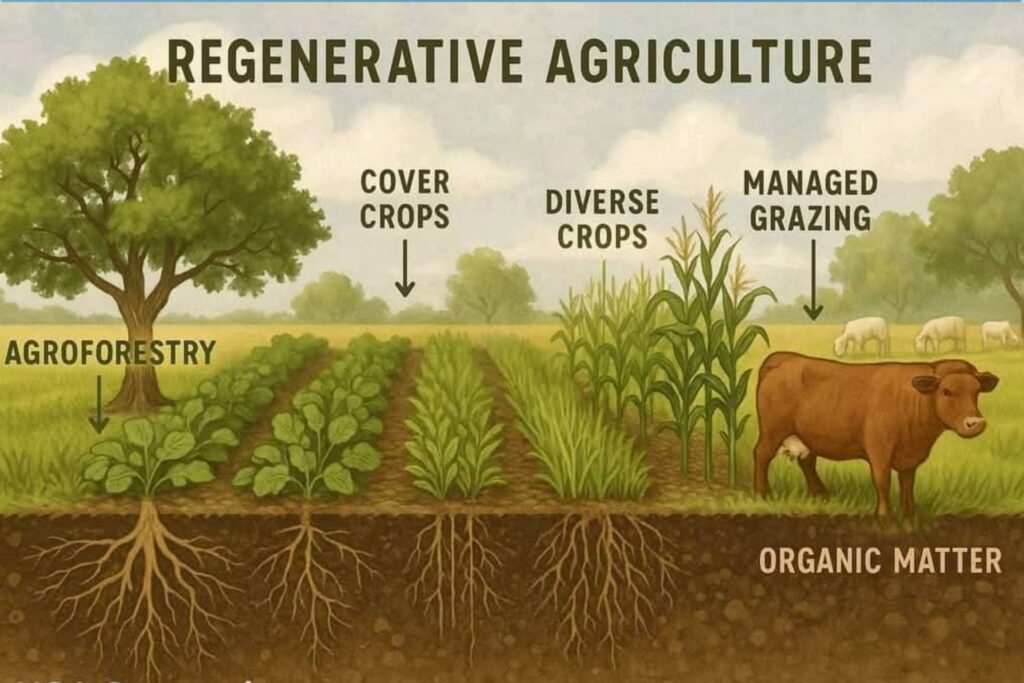
Regenerative agriculture is a holistic farming approach that aims to restore and enhance soil health, biodiversity, water cycles, and ecosystem resilience. Key practices include:
- Cover Cropping: Growing non-cash crops (like clover or rye) to cover soil, prevent erosion, retain moisture, and improve soil fertility.
- Crop Diversity and Rotation: Alternating different crops over time to disrupt pest cycles, enhance soil nutrients, and reduce disease risk.
- Reduced or No-Till Farming: Minimizing soil disturbance to preserve soil structure, improve carbon sequestration, and support beneficial microorganisms.
- Agroforestry: Integrating trees and shrubs into farmland to provide shade, wind protection, biodiversity, and improved nutrient cycling.
- Managed Grazing: Rotationally moving livestock to mimic natural grazing patterns, promoting grassland regeneration and even manure distribution.
- Composting and Organic Inputs: Using natural fertilizers to build soil organic matter and reduce dependency on synthetic chemicals.
- Perennial Crops: Using long-lived plants to stabilize soil, reduce inputs, and provide habitat.
These methods work synergistically to regenerate degraded lands, sequester carbon, and promote ecological harmony.
Drip Irrigation
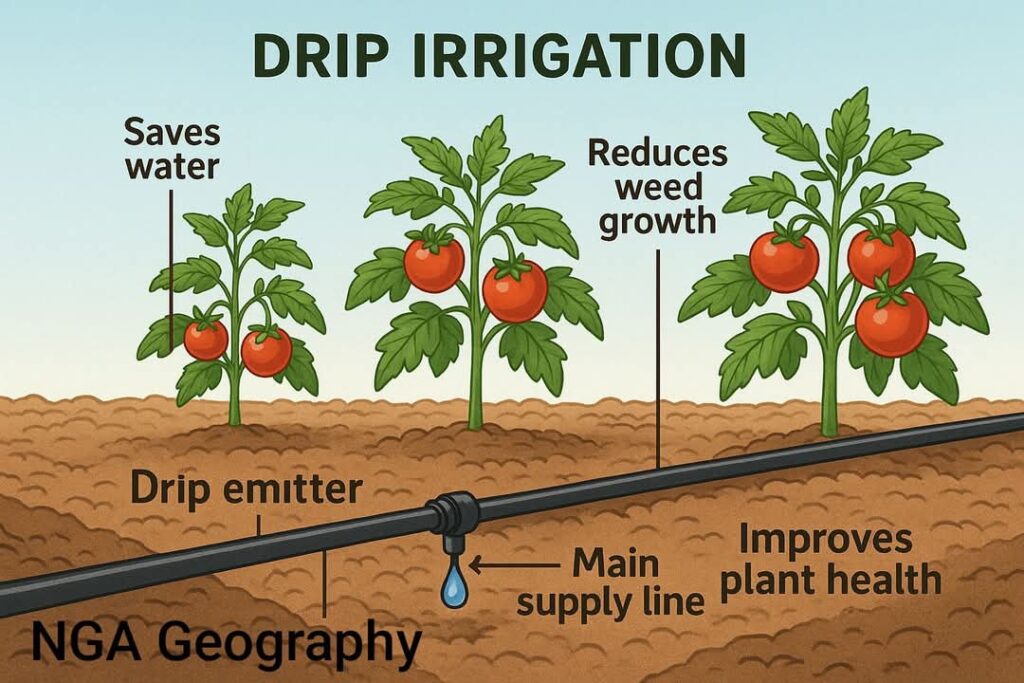
Drip irrigation is a method of watering plants by delivering water slowly and directly to the root zone through a system of valves, pipes, tubing, and emitters. It is highly efficient and commonly used in agriculture, horticulture, and landscaping.
How It Works:
Water is delivered through a main supply line.
Small drip emitters or drip lines release water drop by drop at the base of each plant.
The system can be surface-mounted or buried below the soil.
Advantages of Drip Irrigation Over Other Methods:
- Water Efficiency: Reduces evaporation and runoff. Delivers water precisely where it’s needed, minimizing waste.
- Improved Plant Health: Maintains consistent soil moisture. Prevents overwatering and water stress.
- Reduces Weed Growth: Water is only applied to the root zones, so surrounding soil remains dry, inhibiting weeds.
- Saves Labor and Energy: Often automated, reducing manual watering.
Low pressure and energy requirements compared to sprinkler systems. - Minimizes Soil Erosion: Gentle application avoids disturbing soil structure.
- Fertilizer Efficiency: Fertilizers can be delivered directly through the system (fertigation), enhancing uptake and reducing loss.
- Adaptable: Ideal for uneven terrain, arid regions, or areas with limited water supply.
Drip irrigation is especially valuable in water-scarce regions and for high-value crops where precision and sustainability matter.
Greenhouse Farming
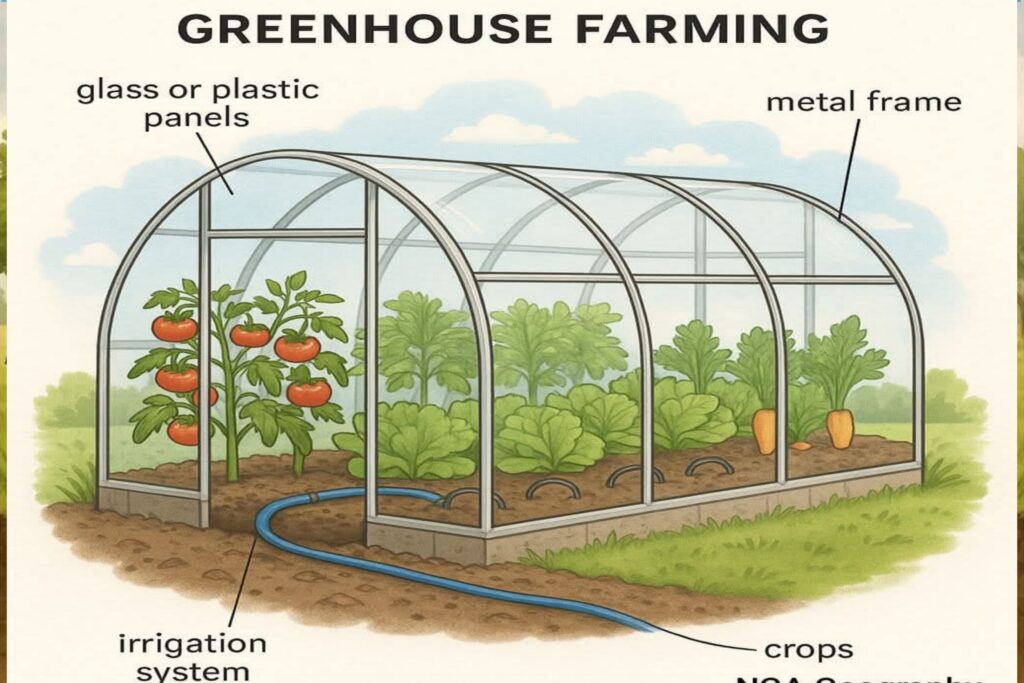
Greenhouse farming is an agricultural method where crops are grown in a controlled environment enclosed by transparent structures—typically made of glass or plastic. This method allows for better control over temperature, humidity, light, and water, enabling year-round cultivation of a wide range of crops.
Key Features of Greenhouse Farming:
- Structure:
-Made of a metal or wooden frame.
-Covered with transparent materials (glass or polycarbonate/plastic) that let sunlight in while retaining heat. - Climate Control:
– Temperature and humidity are regulated using ventilation systems, heaters, fans, and sometimes automated sensors.
– Shading nets or screens may be used to protect crops from excessive sunlight. - Irrigation System:
– Often includes drip irrigation or misting systems for precise -water delivery.
– Reduces water waste and promotes healthier plant growth. - Crop Selection:
– Commonly grown crops include tomatoes, cucumbers, -peppers, lettuce, herbs, strawberries, and flowers.
– Some greenhouses also support hydroponic or aquaponic systems. - Benefits:
– Protection from pests, extreme weather, and disease.
– Higher crop yields and more consistent quality.
– Allows off-season production and higher efficiency in resource use.
Greenhouse farming is especially useful in regions with harsh climates or limited arable land, making it a vital technology for sustainable agriculture.
Source ~ NGA Geography