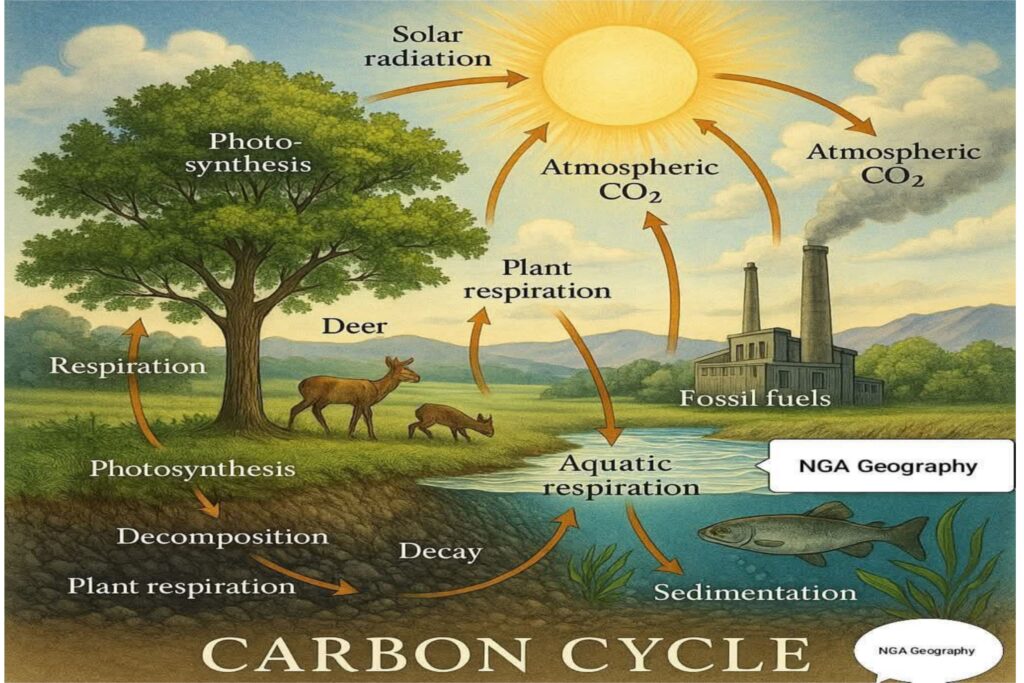
The carbon cycle is the natural process by which carbon moves through the Earth’s ecosystems, atmosphere, oceans, and geosphere. It plays a vital role in regulating Earth’s climate and supporting life. Here’s a breakdown of its major components:
- Atmospheric CO₂
Carbon dioxide (CO₂) exists in the atmosphere and is a central part of the carbon cycle.
Plants, oceans, and certain geological processes absorb and release it.
- Photosynthesis
Plants, algae, and some bacteria absorb CO₂ from the air and, using sunlight, convert it into glucose and oxygen.
This is how carbon enters the biosphere.
Equation:
CO₂ + H₂O + sunlight → C₆H₁₂O₆ (glucose) + O₂
- Respiration
Animals, plants, and microbes breathe out CO₂ as they break down sugars for energy.
This process returns carbon to the atmosphere.
- Decomposition
When organisms die, decomposers (like bacteria and fungi) break down their bodies, releasing carbon back into the soil or atmosphere.
- Oceanic Carbon Exchange
Oceans absorb CO₂ from the atmosphere.
Marine organisms use it to form calcium carbonate shells.
Some CO₂ returns to the atmosphere via oceanic respiration and warming waters.
- Sedimentation and Fossil Fuels
Dead organisms, especially in marine environments, may become buried and over millions of years form fossil fuels (coal, oil, gas).
Carbon is stored long-term underground as sediments or fossil fuels.
- Combustion
Burning fossil fuels releases stored carbon rapidly into the atmosphere as CO₂.
This human-driven activity significantly amplifies atmospheric CO₂ levels.
- Volcanic Activity
Volcanic eruptions also release carbon from Earth’s mantle back into the atmosphere.
Summary Diagram Flow:
Atmosphere ⇄ Plants ⇄ Animals ⇄ Soil/Ocean ⇄ Fossil Fuels/Sediments ⇄ Atmosphere.
The balance of this cycle has been disrupted by human activities, especially fossil fuel combustion, leading to climate change due to increased greenhouse gases.
Regards – Agriculturist